Optimize
Your
Workforce
hexagonknow.com


"I Failed 99% of the Time" — The Brutal Truth
Behind Honda's Success
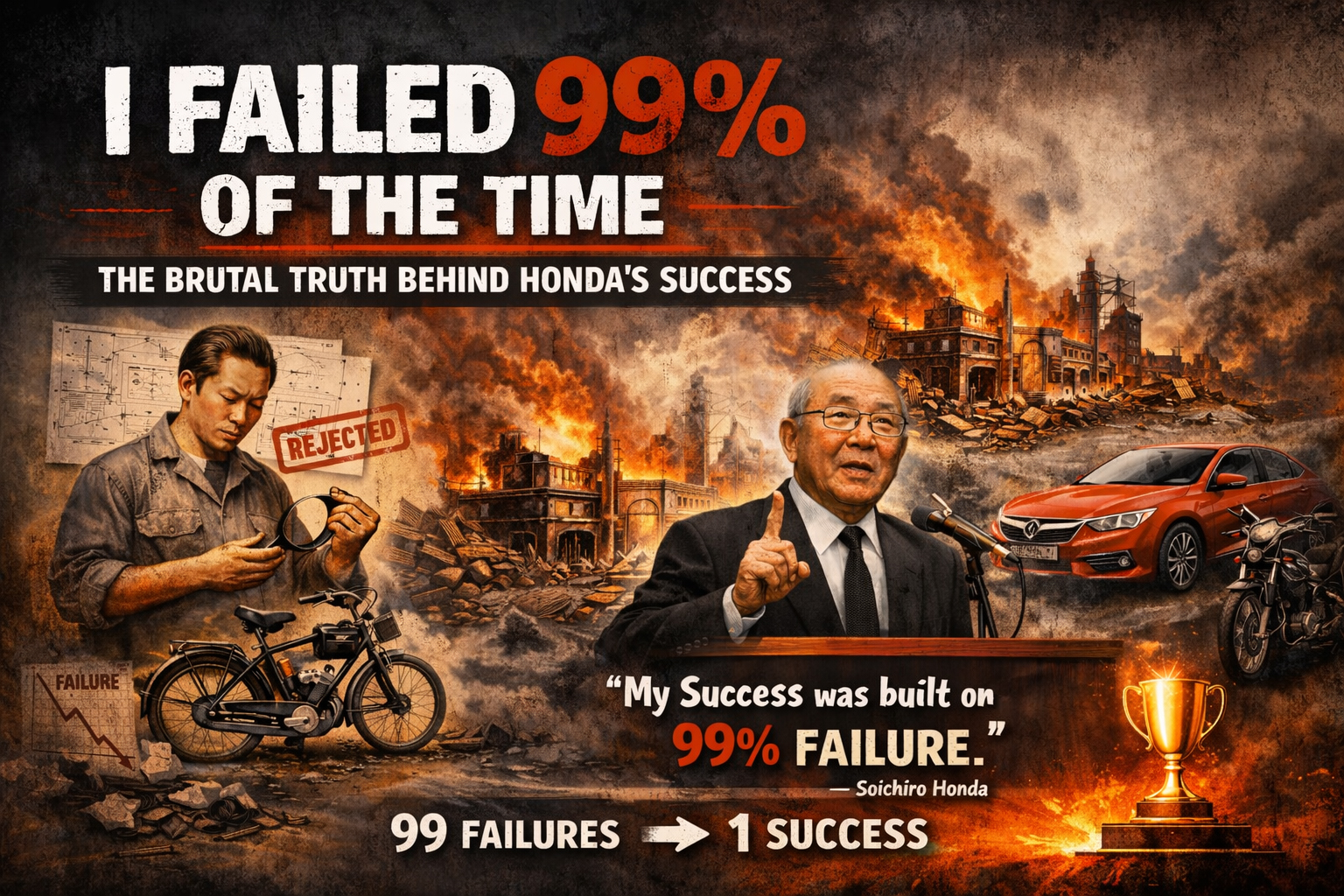
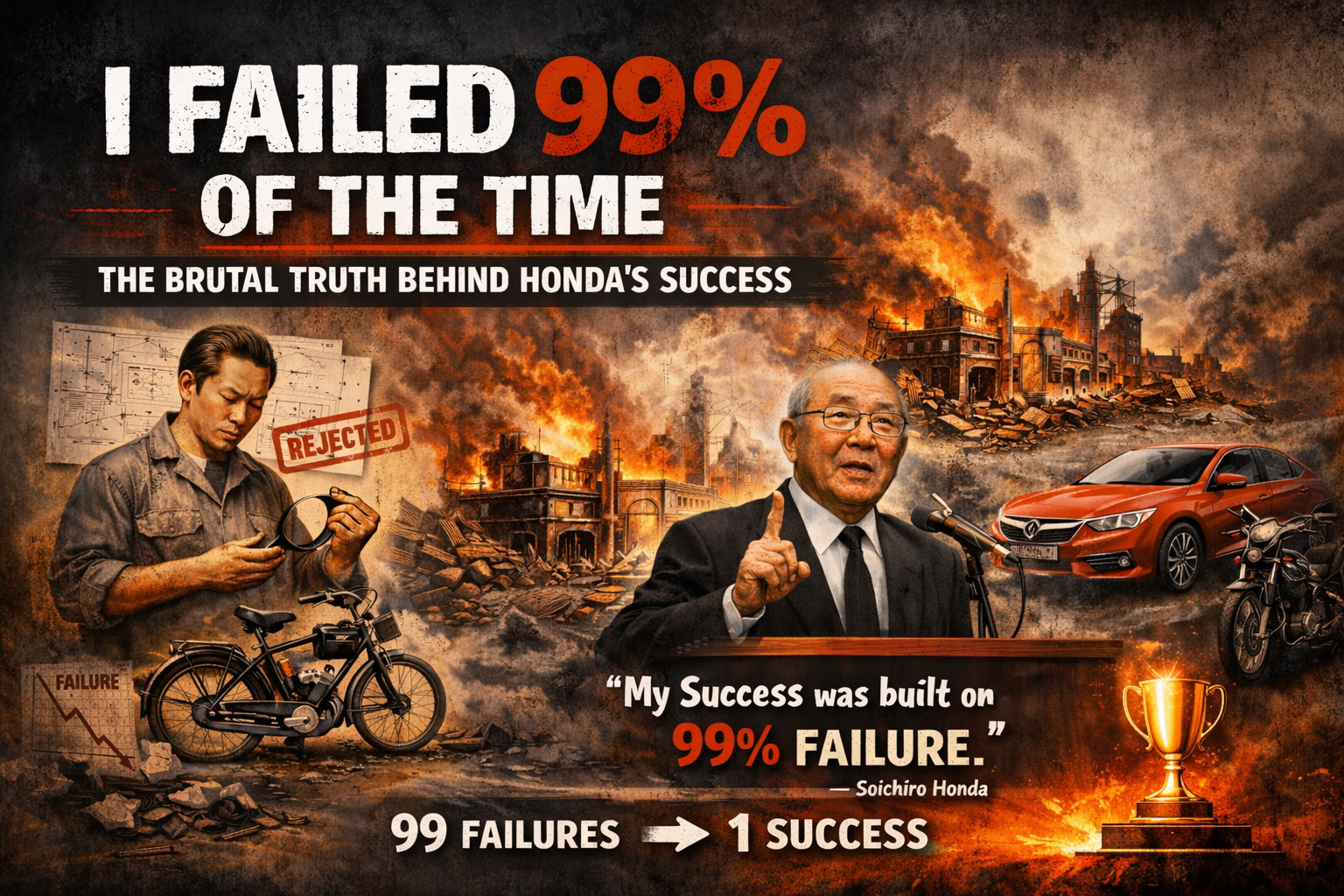
There's a moment in the life of every great builder where the noise fades, the applause becomes irrelevant, and only truth remains. For Soichiro Honda, that moment came in one of his final speeches — not as a celebration of success, but as a confession.
"Success is 1% the result of your work… and 99% the result of your failures."
That wasn't humility. That was reality.
The Myth We Tell vs The Reality He Lived
Most people see Honda today as a global powerhouse — cars, bikes, engineering excellence, reliability. What they don't see is the long trail of failures that built it.
We love clean stories:
- Genius idea
- Hard work
- Big success
But Honda's story was chaos. Repeated failure. Public embarrassment. Financial collapse. War. Rejection. And still — he kept building.
Rejected by Toyota
Honda's early dream was simple: become an engineer. He designed a piston ring and proudly took it to Toyota. They rejected him. Not once — but repeatedly. His design wasn't good enough.
Think about that. The company that would later compete globally… couldn't even get hired. Most people would stop there. Honda didn't.
He went back, studied harder, redesigned, failed again, improved again — until he finally got accepted. That alone would be a success story for most. For Honda, it was just the beginning.
War Destroyed Everything He Built
After finally getting into manufacturing, he built a factory. Then World War II happened. Bombings destroyed his factory. Not once — twice.
What do you do when everything you worked for is reduced to rubble? Most people quit. Honda sold the remnants for scrap. And started again.
No Fuel, No Business, No Problem
After the war, Japan had a massive problem — no fuel. Cars were useless. Transportation collapsed. But Honda saw something others didn't.
He took a small engine, attached it to a bicycle, and created a motorized bike. That was the birth of what would become a global empire. Not from opportunity. From constraint.
Failure Was His Strategy (Whether He Knew It Or Not)
Honda didn't avoid failure. He walked straight into it. Over and over again.
- Designs failed
- Machines broke
- Businesses struggled
- Markets rejected him
But here's the difference: He didn't treat failure as a signal to stop. He treated it as data.
Each failure told him:
- What didn't work
- What needed fixing
- Where to improve
That's the part most people miss. Failure isn't the opposite of success. It's the raw material of success.
The Final Speech — No Sugarcoating
Near the end of his life, when he had nothing left to prove, Honda didn't glorify his achievements. He didn't talk about dominance or market share.
He said: "My success was built on 99% failure."
Not metaphorically. Literally. Think about what that means. Out of 100 attempts:
- 99 went wrong
- 1 worked
And that one… changed everything.
Why This Matters (Especially For You)
Most people fail once… and stop.
- First rejection → quit
- First bad product → pivot away
- First awkward sales call → avoid it forever
That's the real reason people don't win. Not because they're not smart. Not because they lack resources. But because they can't tolerate the volume of failure required. Honda didn't just tolerate failure. He normalized it.
The Brutal Truth About Building Anything
If you're building something — a product, a company, a career — here's the uncomfortable truth: You are not failing too much. You are failing too little.
Because:
- You're playing safe
- You're avoiding rejection
- You're hesitating to ship
Honda didn't wait for perfect. He built, broke, fixed, repeated. Relentlessly.
The 1% That Changes Everything
That final 1% — the success — doesn't come from brilliance. It comes from endurance. From staying in the game long enough. From stacking failures until something finally clicks.
That 1%:
- Lands the deal
- Cracks the product
- Finds the market
- Builds the breakthrough
But you don't get it… unless you go through the 99%.
If You Remember One Thing
Don't aim to avoid failure. Aim to survive it. Outlast it. Use it.
Because the people you think are "successful"… just failed more times than you were willing to. And kept going.
That's it. That's the whole game.
Final Thought
Honda didn't become great because he was perfect. He became great because he was persistent in the face of imperfection.
So the next time something doesn't work… Good. You're finally doing it right.
Want to Know How You Can Lead Your Team 10X More Effectively?
Discover how our AI-powered training platform can transform your team's performance
Get a Free DemoRelated Articles
View all →
The Untold Story of Squid Game's Creator
From selling his laptop to survive, to creating Netflix's biggest hit—Hwang Dong-hyuk's journey of persistence.

The Importance of Resilience at Work
Resilience is the ability to navigate challenges, adapt to change, and thrive under pressure.

The Power of Adaptability at Work
Adaptability is more than just reacting to change—it's about thriving in it.